Archives
- 2026-06
- 2026-05
- 2026-04
- 2026-03
- 2026-02
- 2026-01
- 2025-12
- 2025-11
- 2025-10
- 2025-09
- 2025-03
- 2025-02
- 2025-01
- 2024-12
- 2024-11
- 2024-10
- 2024-09
- 2024-08
- 2024-07
- 2024-06
- 2024-05
- 2024-04
- 2024-03
- 2024-02
- 2024-01
- 2023-12
- 2023-11
- 2023-10
- 2023-09
- 2023-08
- 2023-07
- 2023-06
- 2023-05
- 2023-04
- 2023-03
- 2023-02
- 2023-01
- 2022-12
- 2022-11
- 2022-10
- 2022-09
- 2022-08
- 2022-07
- 2022-06
- 2022-05
- 2022-04
- 2022-03
- 2022-02
- 2022-01
- 2021-12
- 2021-11
- 2021-10
- 2021-09
- 2021-08
- 2021-07
- 2021-06
- 2021-05
- 2021-04
- 2021-03
- 2021-02
- 2021-01
- 2020-12
- 2020-11
- 2020-10
- 2020-09
- 2020-08
- 2020-07
- 2020-06
- 2020-05
- 2020-04
- 2020-03
- 2020-02
- 2020-01
- 2019-12
- 2019-11
- 2019-10
- 2019-09
- 2019-08
- 2019-07
- 2019-06
- 2019-05
- 2019-04
- 2018-11
- 2018-10
- 2018-07
-
Fmoc-Gln(Trt)-OPfp Substituents at the C position An oxygen
2020-12-12

Substituents at the C11 position — An oxygen-containing substituent at the C11 position also affects the catalytic activity of Δ1-KSTDs. The Δ1-KSTDs from the Gram-positive bacteria R. equi [29], N. simplex ATCC 6946 and IFO 12069 [48,49,52], and R. rhodochrous IFO 3338 [27] were able to 1(2)-dehydr
-
Henderson et al reported that allergen induced airway remode
2020-12-12
Henderson et al. [20] reported that allergen-induced airway remodeling was blocked by the CysLT1 receptor antagonist montelukast. The development of epithelial thickening and mucus accumulation at relatively small bronchi was also suppressed by montelukast. The CysLT2 receptor antagonist BayCysLT2RA
-
vegf inhibitor Unlike the CRF receptor the CRF a receptor
2020-12-11

Unlike the CRF1 receptor, the CRF2(a) receptor binds and is activated by agonists with a broad range of potencies. Therefore, we assessed the ability of strong and weak ligands to desensitize retinoblastoma CRF2(a) receptors. Although stresscopin's N-terminus is two vegf inhibitor longer than the N
-
An intriguing feature of the
2020-12-11
An intriguing feature of the pre and postsynaptic processes at the level of the VTA that have been shown to be mediated by CRF2 receptors [9], [34] is that they are exerted only by agonists with high affinity for both CRF2 receptors and CRF-BP. The four endogenous peptides of the CRF system have hig
-
AKT inhibitor VIII australia Conversely to the reduction in
2020-12-11
Conversely to the reduction in restraint-evoked HR increase following the blockade of CRF receptors, Nijsen et al. [28] demonstrated that BNST treatment with a nonselective CRF AKT inhibitor VIII australia antagonist enhanced the tachycardia evoked by contextual fear conditioning. Taken together,
-
Our study demonstrated that the sequential events of PKA
2020-12-11
Our study demonstrated that the sequential events of PKA and AMPK activation were involved in kinsenoside-mediated lipolysis. Within 1 h, PKA transiently inhibited AMPK activation by mitigating LKB1-mediated AMPK phosphorylation at Thr172, and PKA reduced AMPK-mediated phosphorylation at HSL-Ser565
-
An additional difference in ACC
2020-12-11
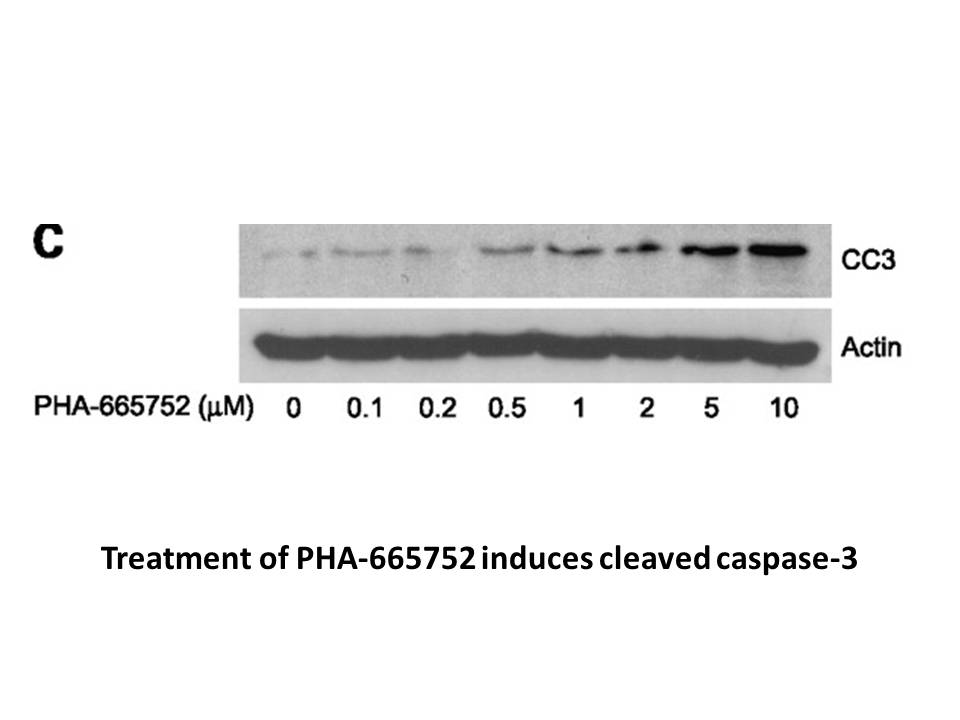
An additional difference in ACC-1 between H. contortus and C. elegans is the results from the oocyte expression experiments. Here we found that unlike Cel-ACC-1 that was reported to form a functional homomeric channel (Putrenko et al., 2005), Hco-ACC-1 does not. However, we have observed that in gen
-
br Materials and methods br Results br Discussion In
2020-12-11
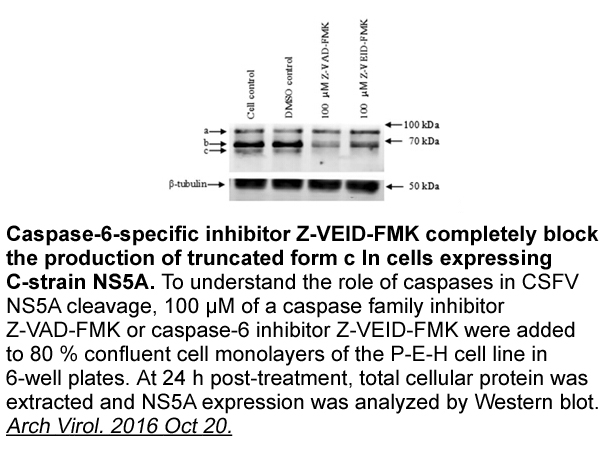
Materials and methods Results Discussion In this study, we confirmed the activation of Akt by udenafil in 3T3-L1 cells. To elucidate the underlying mechanism of udenafil, we focused on the mitochondria. Our findings demonstrated that udenafil improved mitochondrial function and expression o
-
br Funding This work was
2020-12-11
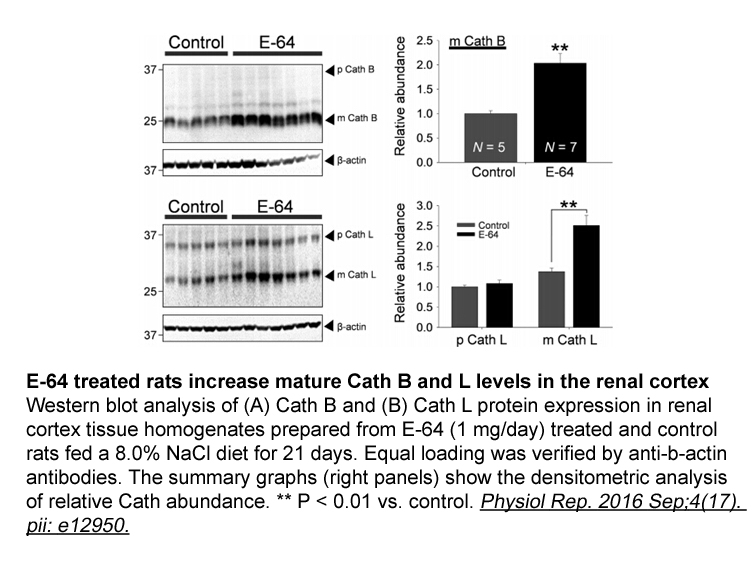
Funding This work was partly supported by the grant ‘Maria Grazia Cuccoli’ from Fondazione Cassa di Risparmio di Bologna. Declarations of interest Acknowledgements Introduction The main strategy of oncolytic viral therapy is based on the fact that naturally occurring or engineered virus
-
Regardless of its effect on EBV
2020-12-11
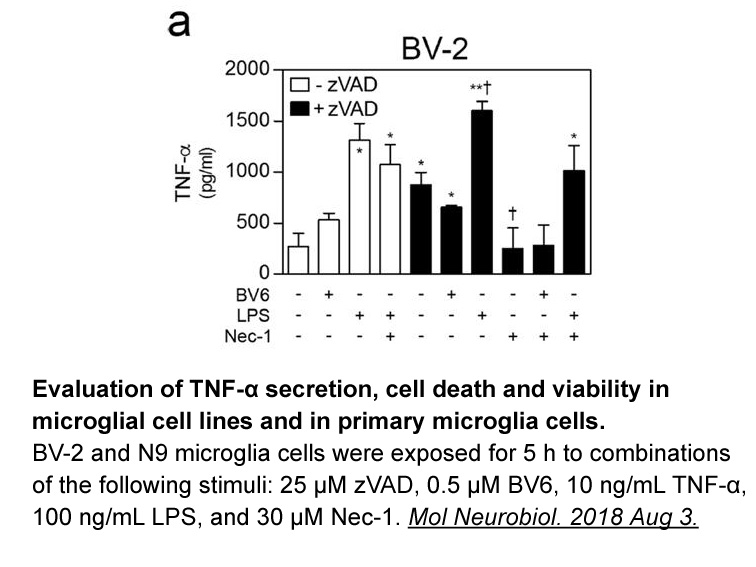
Regardless of its effect on EBV infection, the chemokine system has been found to be regulated in both nasopharyngeal cancer and Hodgkin lymphoma. As such, Hodgkin and Reed–Sternberg (HRS) cells from Hodgkin lymphoma and nasopharyngeal carcinoma cells have been shown to express CXCL8 and CCL17. Furt
-
EBI remains an orphan GPCR and the identity
2020-12-10

EBI2 remains an orphan GPCR and the identity and source of its ligand are yet to be described. Molecular studies of EBI2 have suggested that this receptor has constitutive activity, similar to that observed for many herpesvirus-encoded 7TM receptors (Benned-Jensen and Rosenkilde, 2008, Rosenkilde et
-
BRCC is the catalytic subunit responsible for the majority o
2020-12-10
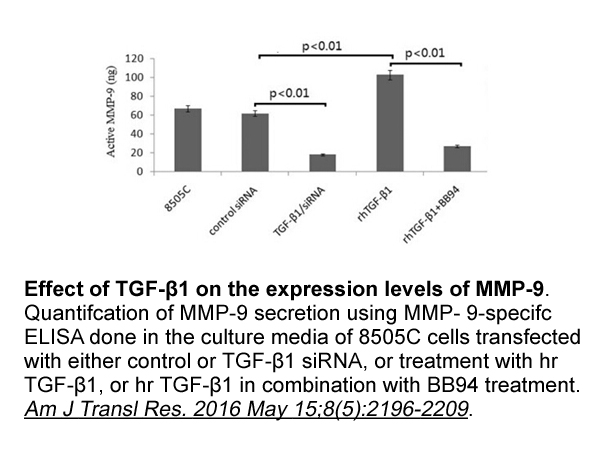
BRCC36 is the catalytic subunit responsible for the majority of K63-Ub-specific DUB activity in the cytoplasm and in the nucleus as part of two distinct macromolecular assemblies characterized by the presence of either of the MPN– pseudo DUB proteins KIAA0157 or Abraxas (Cooper et al., 2009, Dong et
-
The synthesis of compounds a and b are outlined in
2020-12-10
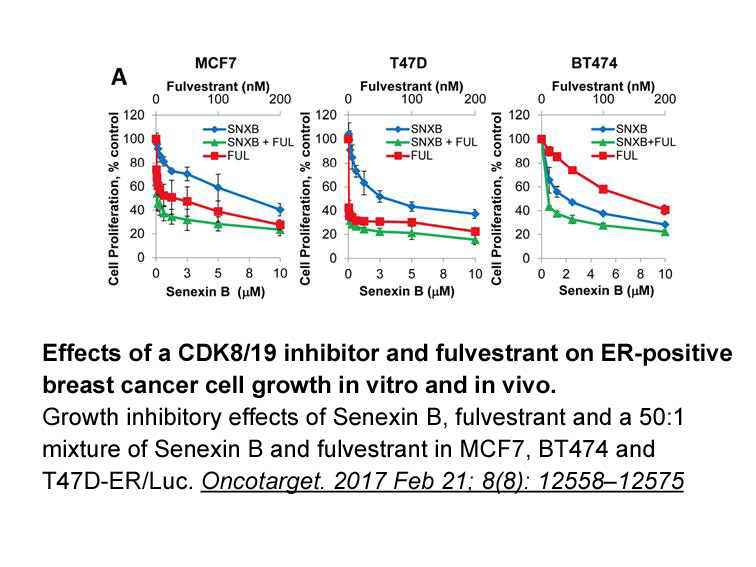
The synthesis of compounds 7a and 7b are outlined in Scheme 2. Compound 5 was obtained by di-tert-butyl pyrocarbonate protection of Dynasore sale 4a. Then, compounds 6a and 6b were obtained by amination of the fluoride with a morpholino and dimethylamine, respectively. Target compounds 7a and 7b wer
-
In addition to G coupling
2020-12-10
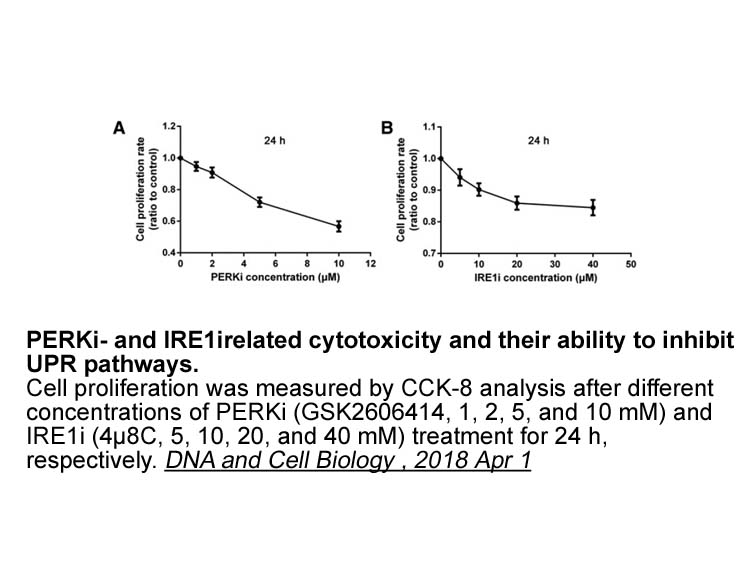
In addition to Gα coupling, it is important to consider that the transition from goal-directed to habitual drug taking also relies on striatal D2R-A2AR heterodimers. Following cocaine self-administration, D2R-A2AR density is increased in the NAc, leading to greater antagonism of the inhibitory (anti
-
In the present work we
2020-12-10
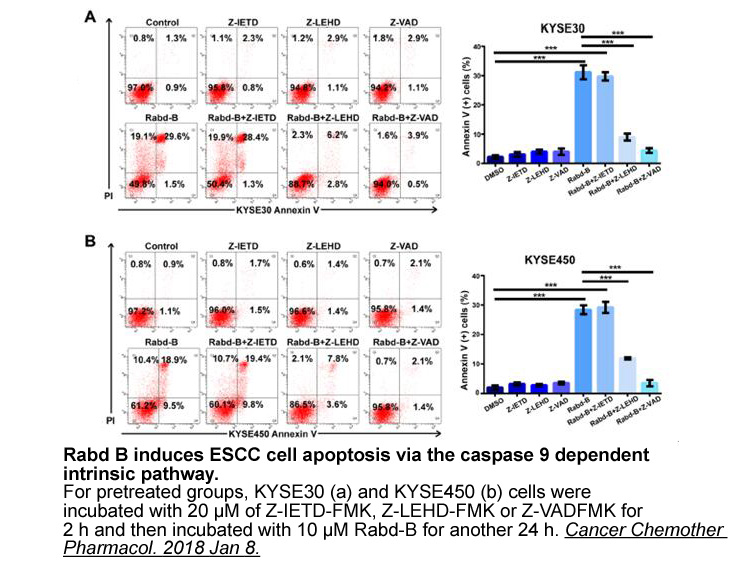
In the present work, we ask whether rNMP incorporation is an evolutionarily conserved property of DNA synthesis in Archaea. For this purpose, we used the best characterized hyperthermophilic anaerobe, Pyrococcus abyssi GE5 [47]. This strain duplicates its genome as fast as Bacteria, supported by euk
16253 records 750/1084 page Previous Next First page 上5页 746747748749750 下5页 Last page